

Why Colored Gemstone Engagement Rings Are Having a Major Moment
For decades, the engagement ring "script" barely changed: round diamond, white metal, solitaire setting. That script is being rewritten. More couples than ever are choosing a colored center stone — sapphire, emerald, ruby, and beyond — as a way to say something a plain diamond can't: this ring is ours, and no one else's.
At Gems by Gigi, we've watched this shift happen in real time, and it's not a passing fad. It's a genuine reset in how people think about what an engagement ring is supposed to look like. Here's why colored gemstones are trending, which stones are leading the charge, and how to choose one you'll love for a lifetime.
Why Couples Are Falling for Color
A few forces are driving this shift at once:
- Individuality over tradition. Modern couples want a ring that reflects their own story, not a default. A colored center stone is an easy, meaningful way to stand out without going overboard.
- Celebrity and royal influence. Iconic colored-stone rings — most famously the oval blue sapphire once worn by Princess Diana and now by Catherine, Princess of Wales — proved that colored stones can be just as elegant and enduring as a diamond.
- Value and versatility. Many colored gemstones offer serious visual impact — richer saturation, larger apparent size — at a lower price point than a comparable diamond, which matters as couples balance ring budgets with other financial goals.
- A wider color story. From moody teal sapphires to soft rose morganite, colored stones let a ring match a personality in a way a colorless diamond simply can't.
The Stones Leading the Trend
Sapphire
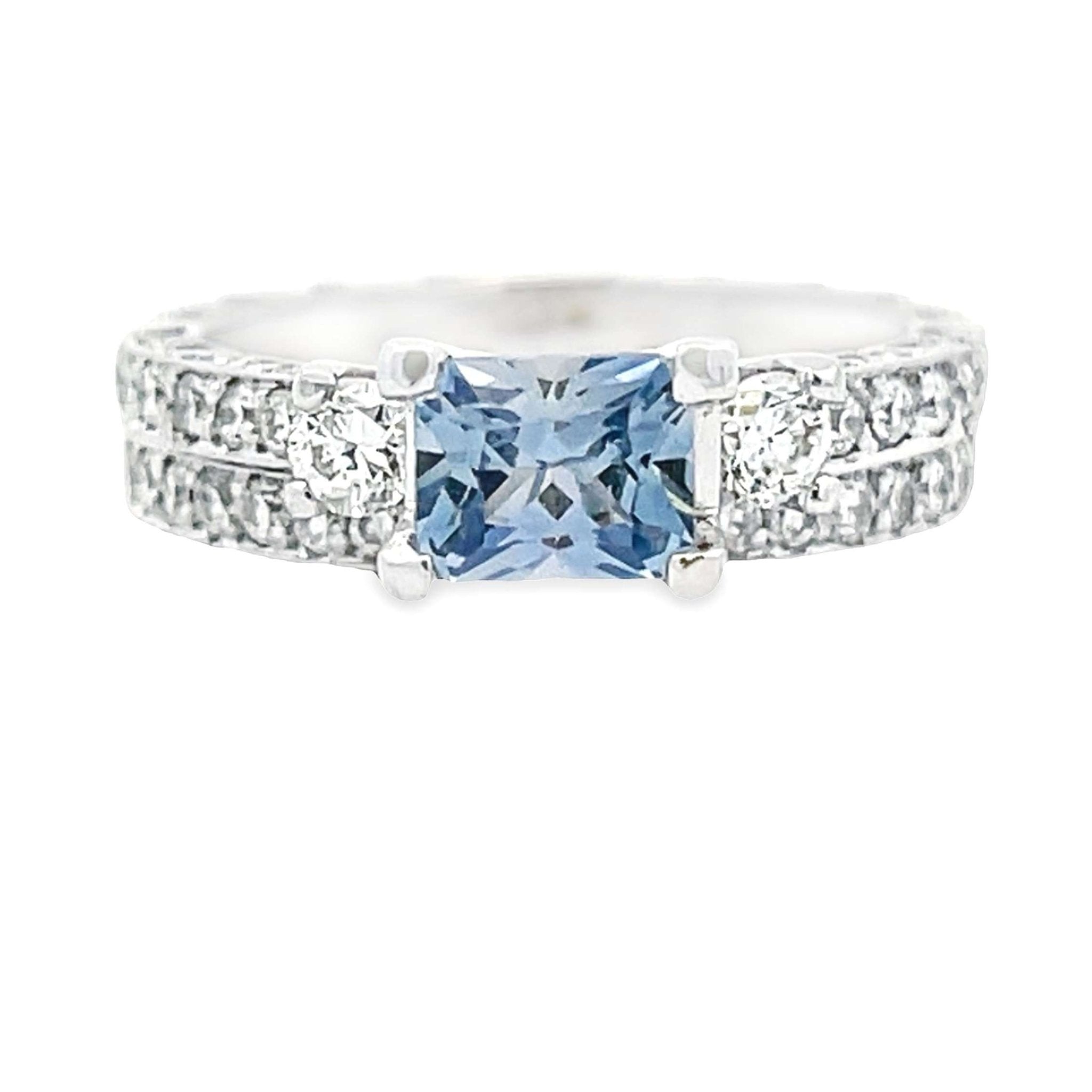
Still the reigning favorite of the colored gemstone world, and for good reason: sapphires are hard enough (a 9 on the Mohs scale) for daily wear, and they now come in far more than classic royal blue — think teal, peach, lavender, and blush pink. Sapphire pairs beautifully with both yellow gold, for warmth, and platinum or white gold, for contrast.
💍 Shop the look: Estate Radiant Blue Sapphire Diamond Engagement Ring Bridal Set — $3,999 (reg. $4,795) — Shop this ring →
Prefer a warmer hue? We also carry a Pink Sapphire Diamond Halo Ring and a statement Yellow Sapphire Diamond Ring.
Or see every sapphire option together in our Sapphire Engagement Rings collection →
Emerald
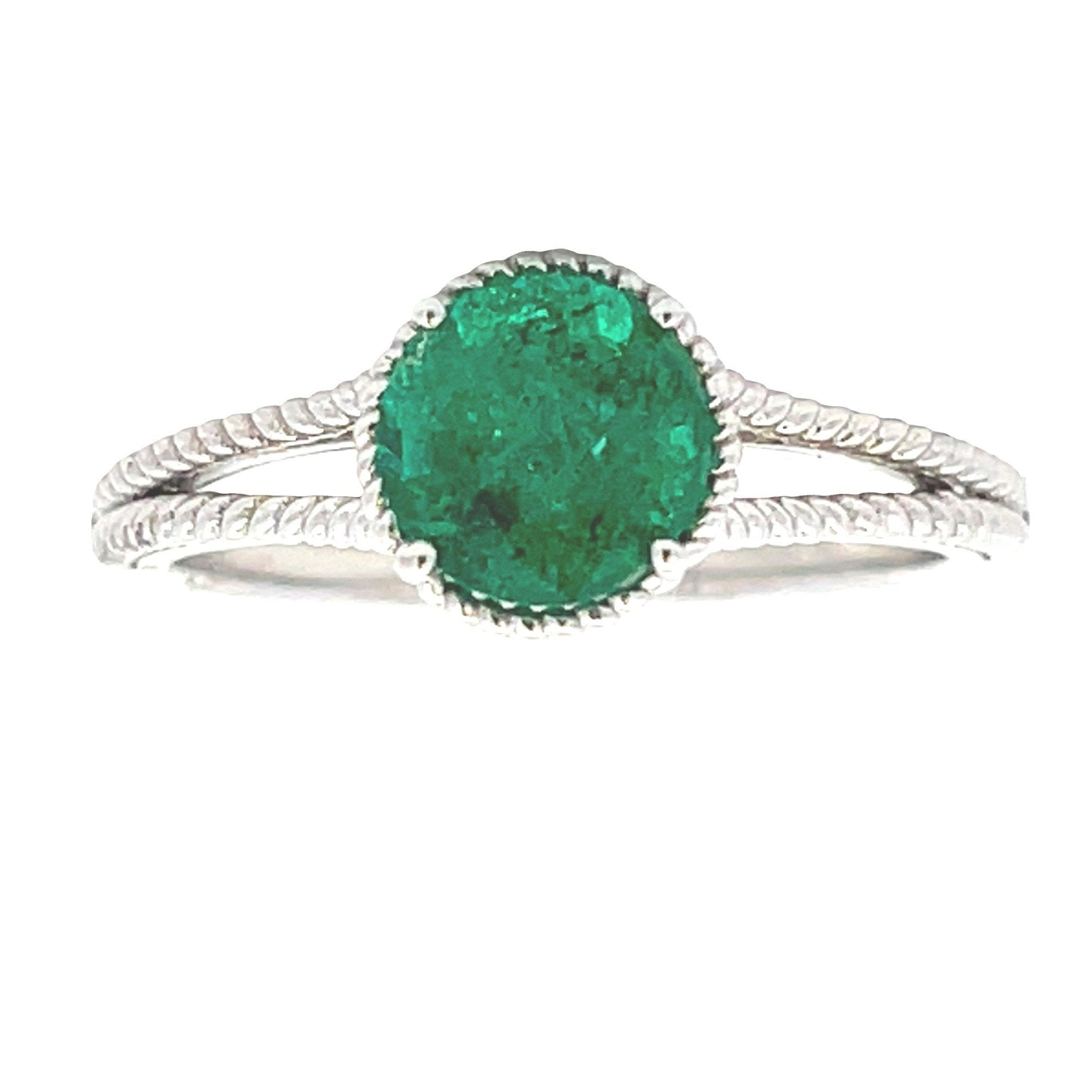
Lush and verdant, emerald is the stone of renewal and vitality. It's a softer gem than sapphire, so it does ask for a bit more care (avoid the dishwasher and steam cleaners), but its old-world glamour is unmatched — especially in a vintage-inspired setting with yellow gold.
💍 Shop the look: 1.28ct Emerald Solitaire Ring 14kt — $729 (reg. $999) — Shop this ring →
Ruby

Bold, fiery, and unapologetically romantic. A ruby center stone makes a dramatic statement, whether set as a solitaire or framed by a diamond halo. Like sapphire, ruby is a corundum gem, so it wears well for everyday life.
💍 Shop the look: 1.26ct Ruby Diamond Halo Ring 14kt White Gold — $1,359 (reg. $2,819.95) — Shop this ring →
Morganite & Rose-Tone Stones

For couples who want color without a bold statement, morganite's soft blush pink is a favorite — romantic, wearable, and stunning set in rose gold.
💍 Shop the look: Natural Pink Morganite & Diamond Claw-Prong Ring 14kt Rose Gold — $1,599 (reg. $2,229.99) — Shop this ring →
Love the same soft palette but want a slightly harder everyday stone? Our Pink Sapphire Diamond Halo Ring is a beautiful alternative.
Beyond the Big Three
Alexandrite (which shifts from green to purplish-red depending on the light), aquamarine's serene pale blue, peridot's fresh green, and tourmaline's huge range of hues are all gaining fans among couples who want something genuinely one-of-a-kind.
How to Choose the Right Colored Gemstone
- Think about durability first. If the ring will be worn every single day, a harder stone — sapphire or ruby — will hold up with far less babying than emerald, opal, or morganite.
- Let the metal do some of the work. Warm metals (yellow or rose gold) intensify a stone's warmth; white gold or platinum sharpen contrast and make color pop.
- Consider what the color means to you. Many couples choose a birthstone, a shade tied to a memory, or simply a color they love — and that personal layer is exactly what makes these rings feel so meaningful.
- Ask about origin and certification. A reputable jeweler should be able to speak to a stone's origin, treatment, and grading, so you know exactly what you're getting.
A Ring That's Entirely Yours
Colored gemstone engagement rings aren't a trend you'll outgrow — they're a return to something more personal. Whether you're drawn to a deep sapphire, a lush emerald, or a soft morganite blush, the right colored stone turns an engagement ring into something that tells your story, not just a tradition.
Ready to find your stone? Browse our colored gemstone engagement ring collection → and let the Gems by Gigi team help you find (or design) the ring that's unmistakably yours.
FAQ
Are colored gemstone engagement rings durable enough for everyday wear?
Yes, if you choose wisely. Sapphires and rubies rank a 9 on the Mohs hardness scale, just below diamond, making them excellent everyday choices. Softer stones like emerald, opal, or morganite are still wearable but benefit from a bit more care and occasional re-tightening checks.
Are colored gemstones more affordable than diamonds?
Often, yes — many colored gemstones offer a larger, more vivid look for the price compared to a similarly sized diamond, though price varies widely by stone type, origin, and quality.
What's the most popular colored gemstone for engagement rings right now?
Sapphire remains the top choice, especially in blue, teal, and soft pastel tones, followed closely by emerald and ruby.